ALVO1.9
English

ALVO1.9 / Use Case

Construction. Plants. Sport.For every site that needs a conversation, not a broadcast.

On a construction site, so a safety call never arrives a beat late. In a working plant, so coordination continues while the line runs. In sport, so timing holds across a large venue and a loud crowd. ALVO1.9 is not a radio built merely to pass a message along.

These uses are suggestions based on the product’s functions, not a record of installations. For real installations of B-EAR products, see case studies (Japanese).

Field — 01–09

Certain communication, wherever the work is

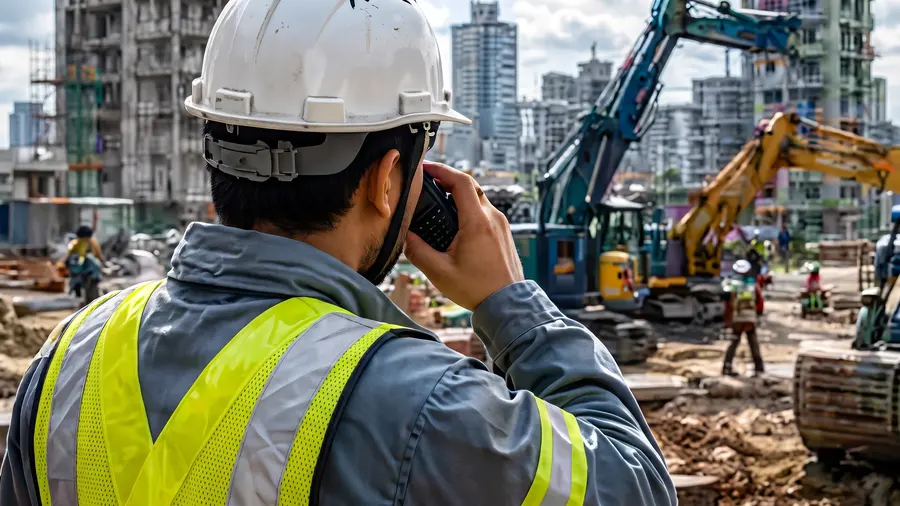
Worker on a construction site with heavy machinery running

01 — CONSTRUCTION & INFRA

Construction & Infrastructure

Work instructions and safety management that survive the noise.

Under the swing radius of a crane. Beside a rock drill. Alongside a running line. “One centimetre to go” and “Stop” are the words that keep people safe.

  • Still a conversation under machinery, blasting and drilling
  • No push-to-talk, so you can answer with both hands full
  • 95g and 12.5mm thin — no clash with your kit, easy to forget you have it
  • Rooms let you switch between crew talk and an all-hands call

More on construction and factories →

Operator working on a running production line

02 — MANUFACTURING

Manufacturing & Factory

Share a fault without stopping the line.

Press strikes, compressor exhaust, the constant run of the conveyor. Whether the one person who hears the odd noise can reach maintenance and QA at the same moment.

  • ENC 2.0 holds down steady machine noise and lifts out the voice band
  • Up to 10 talking at once — line, maintenance and QA in one conversation
  • Answer with both hands full, without breaking off the task
  • Rooms switch between line-by-line talk and an all-hands call

More on construction and factories →

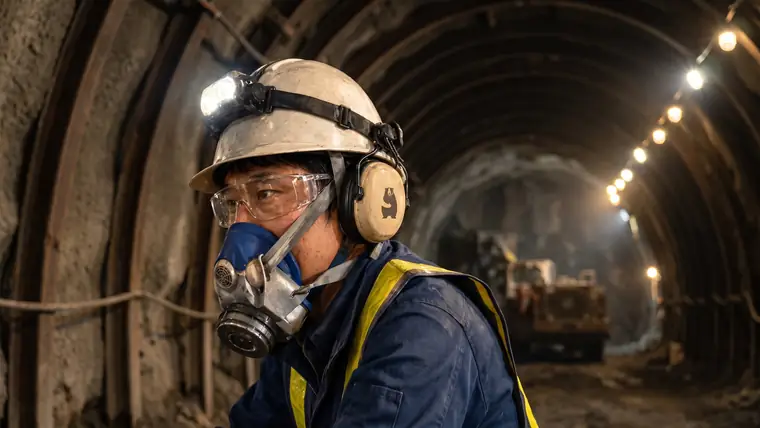
Tunnel worker wearing ear muffs and a dust respirator

03 — TUNNEL & UNDERGROUND

Tunnel & Underground

Link the face to the portal where no signal reaches.

Dust and noise underground, ears and mouth already covered by muffs and a respirator. The places cellular and Wi-Fi cannot reach are exactly where you need units that talk to each other.

  • No base station or cellular needed — nothing to install underground
  • Group linking can reach roughly 2.4km in open line of sight; linking adds delay and lowers sound quality, so it is not suited to sites that need noise cancelling on at all times
  • ENC 2.0 keeps a conversation working through blasting, drilling and fans
  • Hands-free, so nobody removes their protective gear to answer
Nursing and care staff coordinating on a hospital ward

04 — MEDICAL & CARE

Medical & Care

Call for help without taking your eyes off the patient.

Mid-transfer, mid-procedure, the moment you notice someone heading for the door. The times you cannot free a hand are exactly the times you need to say “someone, now.”

  • Hands-free, so you can call for backup while still supporting a patient
  • No button to press, so you can call for help without stopping care or treatment
  • 95g and 12.5mm thin — it stays comfortable across a long shift
  • Calls are encrypted with AES-256 (what is said aloud can still be overheard, so mind where and how loudly you speak)
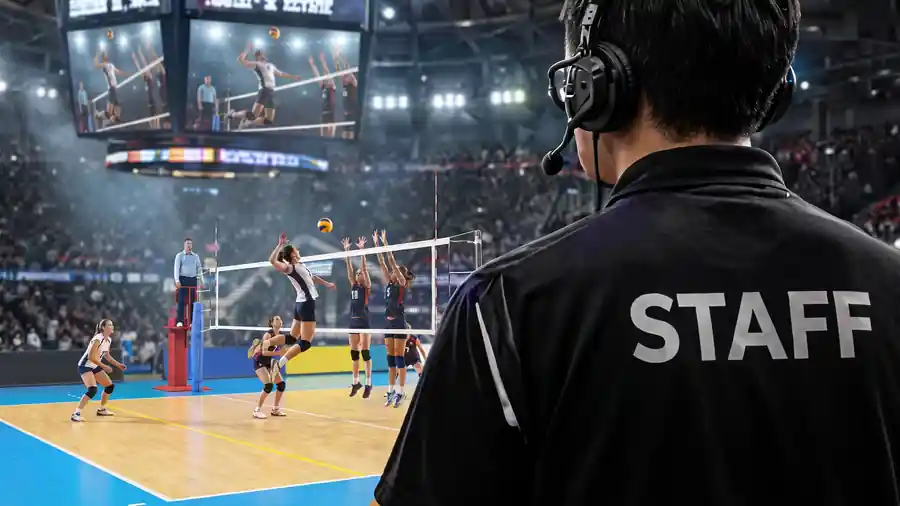
Event staff running operations in an arena

05 — EVENT & SPORTS

Events & Sports

Staff coordination, event operations and referee communication.

A stadium concourse packed with thousands. With the crowd and the PA on top of each other, a fraction of a second ruins a call and jams the flow of people.

  • 1.9GHz DECT is built to hold up where Wi-Fi and 2.4GHz are dense
  • Up to 10 talking at once — cues hand over at conversation speed
  • RM T reaches everyone; RM A, RM B and RM C split by post
  • Ultra-low latency keeps cue timing and calls in sync

More on sports →

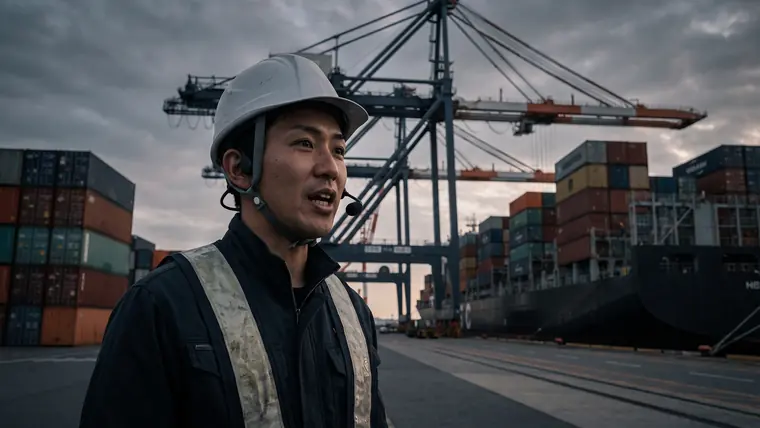
Dock worker on a container terminal

06 — PORT & MARITIME

Port & Maritime

Get the signal across, over wind and water.

Under the quay crane, on deck during mooring, judging the gap to a barge. Offshore there is no base station to lean on, and wind noise takes the voice with it.

  • No dependence on cellular or base stations — it works as-is offshore
  • ENC 2.0 pulls the voice out of wind and engine noise
  • IP67 waterproof case (sold separately) for spray and rain
  • Ultra-low latency keeps rigging and berthing signals in step
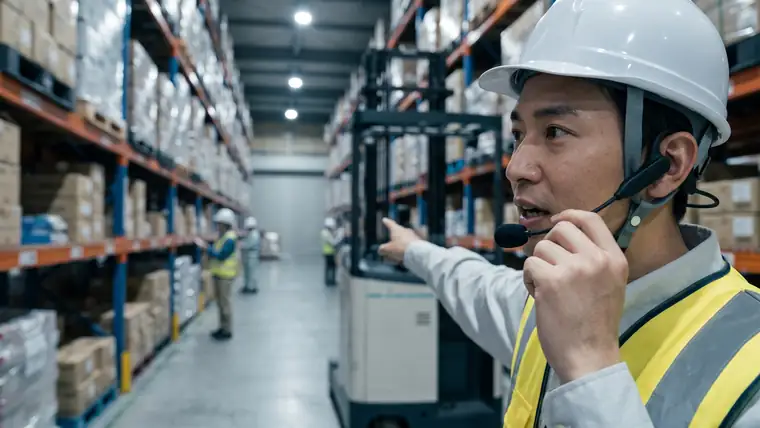
Warehouse staff picking stock on a distribution floor

07 — LOGISTICS & WAREHOUSE

Logistics & Warehouse

Connect both ends of the floor without walking over.

The aisles between racks, the forklift lanes, the turnaround at the dock. Every minute spent looking for someone becomes a minute of stalled throughput.

  • Units link directly with no base station — nothing to install in the building
  • Group linking scales to 3 groups, 26 units and roughly 2.4km (distance measured in open line of sight)
  • Roaming registration means crossing floors or buildings is just a switch
  • Hands-free, so you can answer with a carton and a scanner in your hands
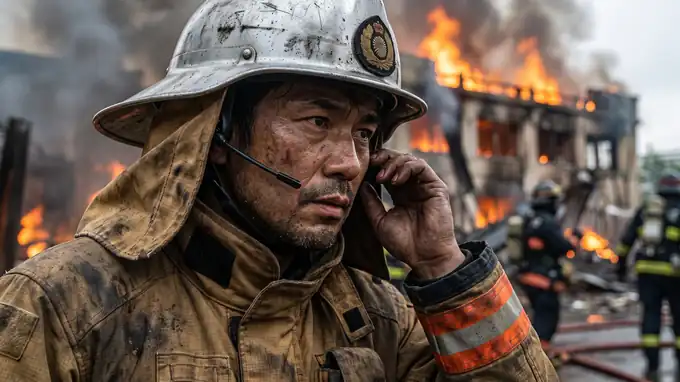
Firefighter using a radio on a fire ground

08 — RESCUE & DISASTER

Fire, Rescue & Disaster

Keep the crew connected through fire and rescue operations.

Beyond the smoke, under the roar of the hose, along an entry route you cannot see down. Whether one voice lands is not a question of good organisation — it decides whether people stay safe.

  • Entry teams and command talk at the same time, without asking twice
  • ENC 2.0 lifts the needed voice out of hose and engine noise
  • Runs in rain and under water spray with the optional IP67 case
  • AES-256 encryption protects what is said
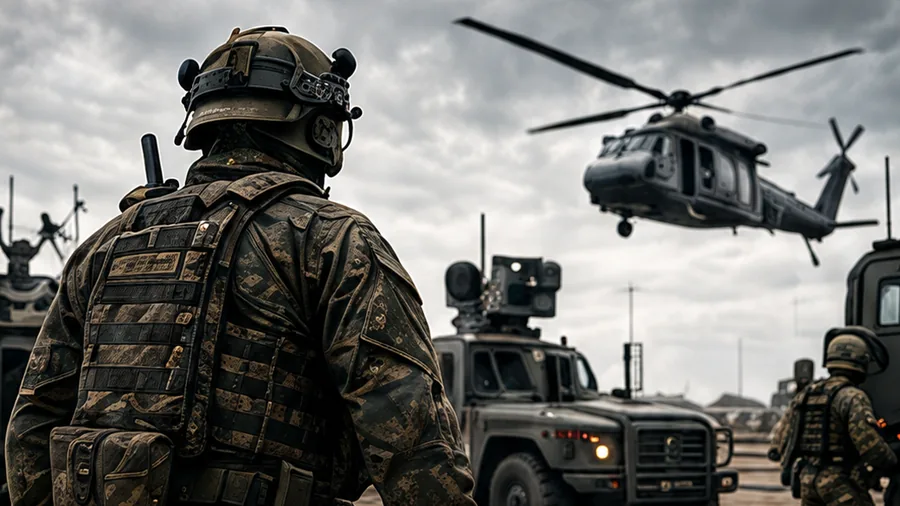
Personnel and a helicopter deployed for disaster recovery

09 — DEFENSE & RECOVERY

Defense, Coast Guard & Recovery

Command, confirm and report without relying on infrastructure.

A disaster zone with the network down. Open water or mountains with no base station. ALVO1.9 works device to device, so nothing outside your team has to be working.

  • Self-contained — no base station, no mobile network
  • Group linking scales to 3 groups, 26 units, approx. 2.4km (distance measured in open line of sight)
  • Register roaming groups and simply switch as you cross zones
  • AES-256 encryption protects what is said

10 — Crowded Environment

The more people there are,
the easier it is to get buried.

ALVO1.9 runs on 1.9GHz DECT, designed to keep working where crowds gather — event venues, stadiums, exhibition halls. Dense Wi-Fi and Bluetooth gear, drones overhead: none of it buries the voices on your site.

Festival and concert venue

Events

Staff coordination at festivals and concerts

Stadium pitch

Sports

Coaches, support staff, operations and referees

Exhibition hall

Exhibitions

Staff coordination at trade shows and events

Busy public and commercial facility

Public & retail

Talking in busy, crowded facilities

11 — Roaming

Keep a site split into zones
connected as you walk it.

Once groups are linked and the covered area grows, patrolling staff move between several zones. Register up to four groups in advance and a short press of the mode button Ⓜ switches to the group you are walking into.

Example 1 — Plants, steelworks, chemical facilities

Production lines, maintenance, central monitoring, outdoor plant — vast sites split into many zones. Put a Master in each and link them, and the whole facility is covered. Maintenance and patrol staff switch to the next zone with one press and keep working without dropping out.

Example 2 — Hospitals and care facilities

Floors, wings, nurse stations, rehabilitation rooms, offices — areas divided by walls and partitions. A Master per floor covers the whole building, so patrolling staff and supervisors switch with one press and stay coordinated as they move.

Example 3 — Stadiums and arenas

Pitchside, stands, gates, security, operations, medical — venues split into wide separate zones. A Master in each covers the whole ground, so roving security and supervisors move across it and stay connected with one press.

On site, a voice is a lifeline.

There are places where being heard is the precondition for everything else. In them, whether one voice lands is not a question of good organisation — it decides whether people stay safe.

B-EAR exists not only as a tool for working faster, but as a tool for bringing everyone home. At the end of the shift, every person who went out comes back — and we support that ordinary outcome from the communication side.

“Passion starts the shift. Purpose brings everyone home.”

12 — FAQ

Frequently asked questions

Is there a two-way radio headset system for hospitals and care homes that works without Wi-Fi?
ALVO1.9 units talk to each other over dedicated 1.9GHz DECT radio, so they do not use the facility's Wi-Fi, network or mobile lines. You talk without pressing a button, so you can call for help without stopping care. Paired with the VEXA headset, the microphone can be switched on and muted by voice. Use alongside medical equipment is evaluated according to each facility's own checks. See b-ear.net/medical/ (Japanese) for details.
Can voices get through the noise of heavy machinery on a construction site?
ENC 2.0 noise cancelling keeps voices from being buried, even near loud machinery. It is hands-free, so you can answer without taking off a helmet or other protective gear.
Will it interfere with Wi-Fi or other radios in a factory?
ALVO1.9 uses 1.9GHz DECT, a different frequency from Wi-Fi and typical 2.4GHz devices, so it is designed to be less affected in crowded radio environments.
How many people can talk at once when running an event or a sports venue?
Up to 10 people per group can talk at the same time. Linking three groups gives 30 units, of which 4 act as relays, so up to 26 can talk at once. The more groups are linked, the more delay and the lower the sound quality.
Does it work in tunnels or underground, where there is no mobile signal?
Units connect to each other without base stations or mobile lines, so it works underground without extra equipment. Group linking can extend the range to about 2.4 km, but that figure is for open line of sight. Linking adds delay and lowers sound quality, so it is not suited to sites that need noise cancelling on at all times.
Can it be connected to a satellite phone and shared by a team in a disaster?
Connect the satellite phone's earphone jack to the ALVO1.9 Master with one dedicated cable, and the whole team can hear and speak on that single line. Connectors and specifications differ by model, so tell us the model name and we will confirm compatibility in advance.

How many units does your site need?
Start there.

How much area you cover, how the crews divide, which headsets to pair, running alongside existing radios.
Nothing needs to be settled before you get in touch.